
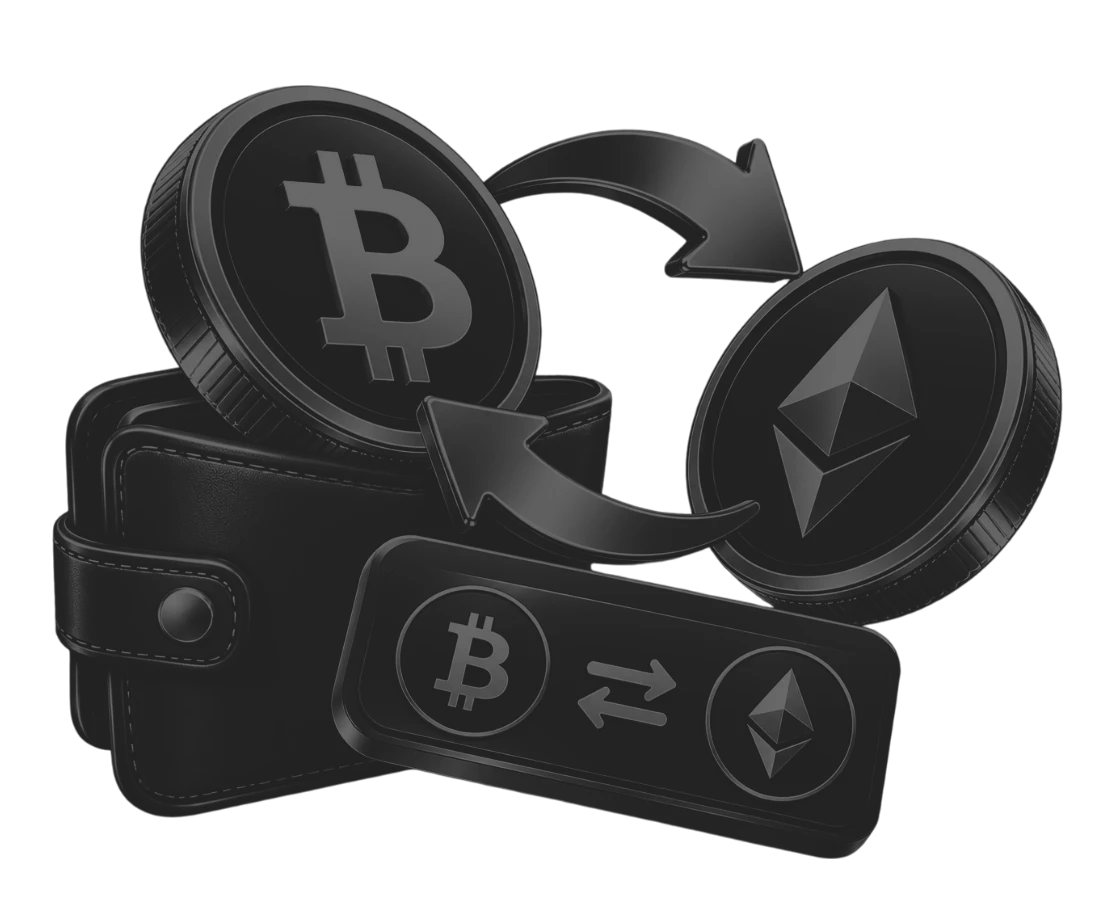
Swap Crypto with Sparkling Straight from Your Own Wallet
On a US exchange, changing one coin into another is a sale and a purchase inside someone else's account. A swap does the same job on-chain, from your wallet, at a price you see before you sign. In Sparkling the agent finds that price and you decide whether to take it.
Swap or Trade, What’s the Difference?
Both end with a different coin, but the mechanics differ. A trade matches your order with another user’s on a platform that holds both sides; a swap settles directly against liquidity at a price quoted for your exact amount.
| Trade on a US exchange | Swap in Sparkling | |
|---|---|---|
| Where funds sit | In the exchange account | In your own wallet |
| Price | Order book at that moment | Best of several quotes for your size |
| Order types | Market, limit, stop | Quoted market price |
| Across blockchains | Withdraw and redeposit | Part of one swap |
| Account needed | Exchange account with KYC | Email sign-in |
How to Swap Crypto in Sparkling
- Make sure the coin you are selling is in your wallet, plus a little of the network’s native coin for gas.
- Type the swap in your own words, such as “turn my ETH into bitcoin” or “sell 2 SOL for USDC”.
- Check the card: amount out, estimated amount in, route, networks and fees.
- Confirm; the swap settles on-chain and lands in your history.
Quotes come from several liquidity sources, Bebop among them, and when two chains are involved the route handles the crossing without a bridge you have to choose.
Are Crypto Swaps Taxable in the US?
Yes. The IRS treats a swap of one crypto asset for another as a disposal of property, so you realise a gain or loss measured in dollars at that moment, even though no dollars change hands. Gains on coins held a year or less are short-term and taxed as ordinary income; longer holdings get long-term rates. Swaps are reported on Form 8949 and Schedule D.
- Record the dollar value of both sides of every swap.
- Stablecoin-to-stablecoin swaps count too, even when the gain is tiny.
- Your Sparkling history lists the date, assets and amounts of each confirmed swap.
Why Crypto Swaps Fail
- The market moved further than the card allowed while the transaction was confirming.
- The quote expired while the card was open.
- There wasn’t enough native coin left to pay gas.
- A small token had too little liquidity for the size requested.
When a swap fails, the tokens never leave your wallet; the only possible cost is gas already spent.
What to Look for in a Crypto Swap App
- Self-custody, so funds aren’t parked on a platform mid-swap.
- The full cost on one screen before you sign, including gas.
- Native assets on the destination chain rather than wrapped copies.
- One clearly identifiable official app, so you can’t be lured to a fake.
If you trade often, the habits and tax side of day trading deserve their own look.
Risks of Swapping
Prices can move between quote and settlement, on-chain transactions can’t be undone, and tokens sent on an unsupported network may be lost. Sparkling app prepares each swap; whether to make it is your decision, and this is not investment or tax advice.
Crypto Swap Questions
How do crypto swaps work?
Liquidity providers quote a price for your exact amount; you sign, and the other token is delivered to your wallet.
Is an exchange account required for swapping?
No. An email sign-in creates your wallet, and swaps run from it directly.
Is a swap a taxable event?
Yes, for US taxpayers each swap is a disposal of property.
Can I swap between blockchains?
Yes. A coin on one of the four supported chains can become a coin on another in one confirmed step.
What does a swap cost?
A network fee and our service fee, both shown first. Most US swaps start from USDC, explained on our stablecoins page.
Updated: